


Osteochondrosis of the cervical vertebrae in women is a common phenomenon after 40 years;its development is caused by a combination of many factors (age, sedentary lifestyle, load on the cervical vertebrae).Under their influence, the elasticity and strength of the intervertebral discs are lost (degenerative-dystrophic changes), their elasticity and height decrease.
At first, the symptoms of osteochondrosis can be almost invisible (muscle tension, tingling of the skin), then they intensify and the patient develops signs of problems with cerebral circulation (headache, deterioration of vision, hearing, memory, pressure spikes).Such violations are dangerous - they can cause the development of:
- persistent hypertension (high blood pressure);
- hypertensive crisis (bleeding in brain tissue);
- neurovascular pathology (reduced muscle strength to complete immobility of the arm).
Osteochondrosis of the cervical vertebrae in women and men begins and develops according to the same scenario;there are no particular differences in the causes, symptoms and treatment of the disease.Some experts note that women more often seek medical help during menopause: in 2/3 of patients, almost all chronic pathologies worsen during hormonal changes, and cervical osteochondrosis is no exception.
Age-related changes in the tissues of the intervertebral disc are irreversible, so it is impossible to completely get rid of the pathology.At an early stage, its development can be stopped with special gymnastics and other physiotherapeutic procedures.After the appearance of intervertebral hernias, surgical restoration of the height of the vertebrae is recommended.
The treatment of cervical osteochondrosis has its own characteristics (related to the fragility and small size of the vertebrae of the department), but it is almost no different from the treatment of thoracic or lumbar osteochondrosis.
At the first signs of the disease, consult a vertebrologist or orthopedist.Various manifestations of cervical osteochondrosis (sleep, vision, hearing, pressure changes) are treated by a therapist and a neurologist.
Overview of symptoms
Signs of damage to the neck in women are almost invisible at first, so the initial stage of the pathology is quite difficult to diagnose.The first to appear are tension, fatigue of the neck muscles and increased headache.
As the disease progresses in women, the symptoms intensify to severe pain in the neck, back of the head, shoulders, shoulder blades and pronounced crunching when turning the head.
In the future, osteochondrosis in women manifests itself as impaired mobility (it is difficult to turn the head, this causes pain), weakness of the upper limbs (up to complete immobility), impaired vision and other numerous symptoms.
Below are listed the most common manifestations of pathology, starting with the most common:
- Painful muscle tension is a response to "slumping" of the intervertebral discs, displacement of the vertebrae.The body tries to compensate, arrange, maintain the spine in the correct position, due to which there is an overstrain of the muscles and subsequently their atrophy (weakness).
- Sharp burning or tearing, squeezing pain in the back of the head, neck, shoulders, shoulder blades is the result of muscle spasm (tension), compression of blood vessels and nerve endings (for example, to the occipital region of the head).The pain syndrome is poorly relieved by painkillers, can be intensified by a long stay in a forced position and radiates to the chest and arms.
- Cracking, crunching during movements and limited mobility of the spine in the cervical region - occur against the background of "settlement" of the intervertebral discs and growth of the bone surface of the vertebral body.
- Impaired sensitivity of the skin, weakening of the muscles of the upper limbs and fingers and shoulder girdle (up to complete immobility) is explained by the involvement in the pathological process of nerve endings that provide communication between these organs and the spine.
- Smooth and loud tinnitus, vertigo, nausea (up to vomiting), impaired coordination of movements, changes in blood pressure - the result of deformation (narrowing, compression) of the large vertebral artery, which provides blood supply to the brain (to the cerebellum and the back of the head).
- The appearance of hiccups and the lack of air (it is not possible to "breathe in" completely) are caused by irritation of the phrenic nerve.

In advanced cervical osteochondrosis, symptoms may include:
- incorrect position, deviation of the head (torticollis);
- difficult swallowing (if the nerves of the pharynx and larynx are involved in the process);
- sleep disturbance, mood changes, depression, panic attacks;
- weakening of attention, memory;
- rapid heart rate.
Methods of treatment
The pathology cannot be completely cured, since the changes occurring in the intervertebral discs are irreversible.The algorithm for treating osteochondrosis of the cervical spine in women is the same as in men.
The approach to therapy is complex:
- with the help of drug therapy, get rid of severe manifestations of osteochondrosis (pain, tension);
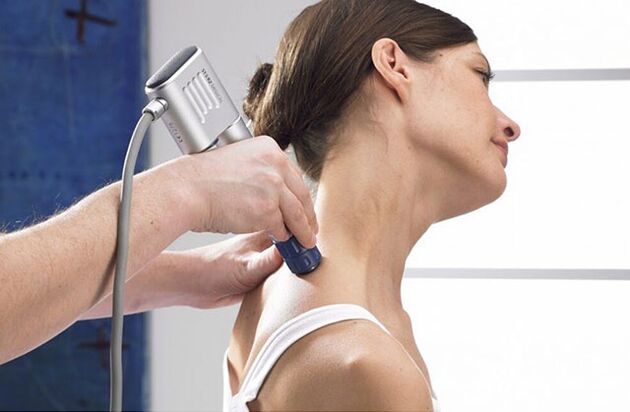
- physiotherapy improves the nutrition of the paravertebral tissues, restores the mobility of the spine;
- therapeutic exercises strengthen the muscles, "stretch" the spine, reduce the load on the discs (in the stage of stable remission or asymptomatic).
It is recommended to do gymnastics constantly (throughout your life), this will help to stop the final deformation of the vertebrae and the development of any complications.
Drug therapy
Treatment of cervical osteochondrosis in women is carried out using conservative methods;pronounced signs of the disease (pain, disorders of cerebral circulation, sensitivity) are alleviated with drugs.
| A group of drugs | What is it prescribed for? |
|---|---|
Non-hormonal pain relievers, anti-inflammatory drugs |
Reduce inflammation and pain |
Angioprotectors |
Improves blood circulation, promotes saturation of tissues with oxygen |
Muscle relaxants |
Relaxes the muscles of the cervical region, improves blood circulation |
B vitamins |
Stimulates rapid recovery of nerve tissue, enhances the effect of anti-inflammatory and pain relievers, improves metabolism |
Chondroprotectors |
With prolonged use, the destruction of cartilage tissue is stopped |
In case of severe pain in the area of the pinched nerve, an analgesic, anti-inflammatory blockade is performed in the paravertebral muscles.The neck is immobilized using a special orthopedic collar or Schantz splint (reduces the load on the muscles of the collar area).
Physiotherapy
Physiotherapy treatment gives good results in osteochondrosis of the cervical spine:
| Methods | What functions do they perform? |
|---|---|
Magnetotherapy |
Stimulates blood circulation, relieves swelling and pain |
Ultrasound |
Stimulates local blood circulation, improves tissue healing |
Electrophoresis with drugs |
Provides delivery of the drug through the skin barrier to the source of pain, quickly relieves the pronounced and residual signs of cervical osteochondrosis |
Therapeutic massage of the collar area |
It relaxes the muscles, improves blood circulation, stimulates tissue saturation with oxygen |
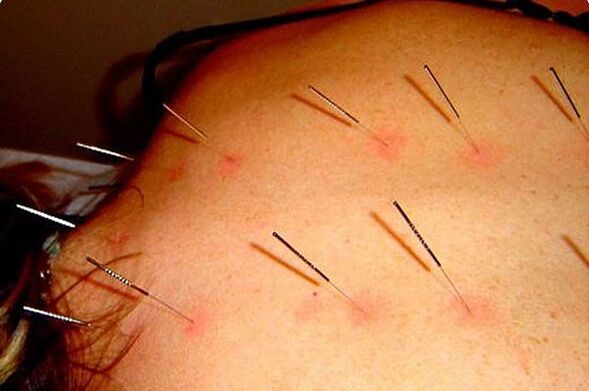
Acupuncture |
Stimulates biologically active points on the body, quickly relieves residual symptoms of the disease |
Women with cervical osteochondrosis benefit from:
- Sanatorium-resort treatment in specialized sanatoriums (up to 2 times a year).
- Mud treatment.
- Warming applications (paraffin therapy).
- Balneotherapy (medicinal baths).
Patients are strongly advised against hypothermia (especially after physical therapy).
Gymnastics for cervical osteochondrosis
Physiotherapy exercises can stop the development of osteochondrosis.They are done to relieve muscle tension, strengthen the muscles and ligaments of the cervical spine, and relieve stress on the vertebrae.
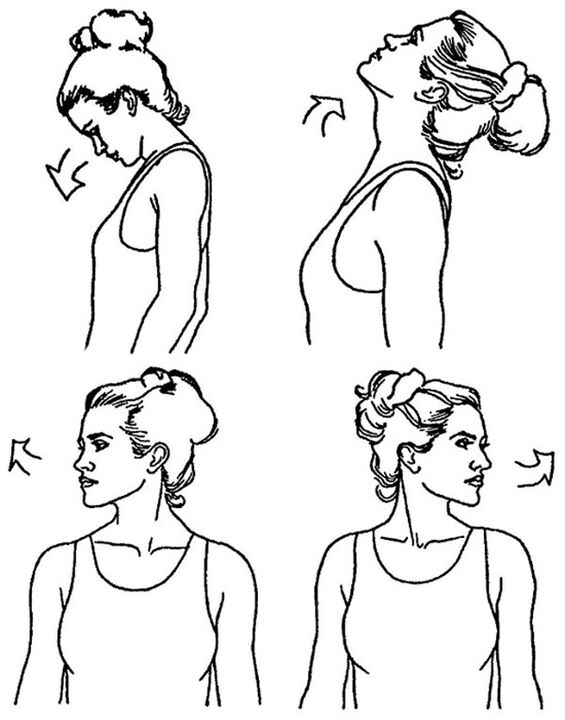
The main exercises for osteochondrosis of the cervical spine are performed sitting or standing, smoothly, without twitching or tension (2-3 minutes every day):
- Tilt your head left and right (toward the shoulder).
- Tilt your head forward (touch your chin to your chest) and then back (touch the back of your head).
- Turn your head to the right (look at your right shoulder) and to the left (look at your left shoulder).
- Lower your head down, touch your chin to your chest.Roll it left and right from shoulder to shoulder and back (as if you are "rolling" your head over your chest).
- Move your head back, roll left and right and back ("roll" on your back from shoulder to shoulder).
- Make a full circular turn with your head from left to right and then from right to left.
- Raise your shoulders up (simultaneously), lower them down.
- Move your shoulders forward and then back.
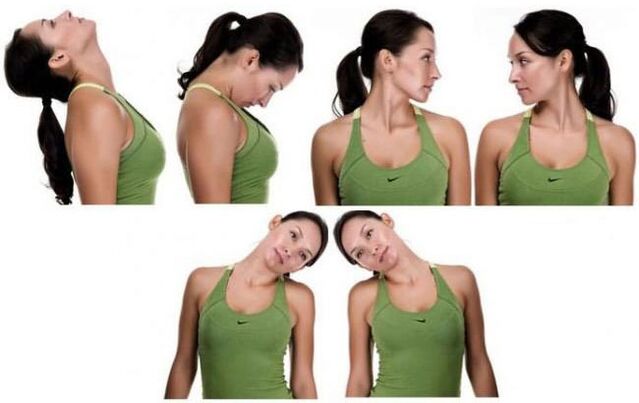
Gymnastics is performed in a period of stable remission (when there are no pronounced manifestations of the disease - pain, swelling, inflammation).
If any unpleasant signs of cervical osteochondrosis in women appear during exercise ("floaters" in front of the eyes, nausea, dizziness), take a break from exercise.If such sensations occur constantly, you should consult a physiotherapist or your doctor.
Nutrition in cervical osteochondrosis
With osteochondrosis of the cervical spine, you can adhere to the general principles of healthy eating, observing the main rule - food should be complete and varied:
- You need to introduce foods into your diet - sources of amino acids, vitamins, minerals that participate in the synthesis of collagen, glycosaminoglycans (important for cartilage), improve metabolism and stimulate the rapid recovery of damaged tissues.
- Limit the consumption of alcohol, strong tea and coffee, salty, smoked and fried foods.These products irritate the inflamed tissue and increase the pain.
What products are recommended for osteochondrosis of the cervical vertebrae:
| Necessary substances in the composition | List of products |
|---|---|
Natural glycosaminoglycans |
Chicken, beef, red fish, hard cheese, avocado, soy, products with gelatin |
Vitamin E and A |
Eggs, liver, fish, vegetable oil, nuts, seeds |
vitamin c |
Citrus fruits, berries, vegetables |
B vitamins |
Lean meat, sea fish, nuts, cereals, cheese, milk |
Vitamin D |
Marine fish, marine fish liver, butter, raw egg yolk |
Vitamin PP |
Vegetables, grains, marine fish, legumes |
calcium |
Cottage cheese, cheese, milk, fermented milk products |
Magnesium |
Dark chocolate, rice bran, pulses, cereals |
Phosphorus |
Sea fish, seafood, legumes, milk, hard cheese |
Sulphur |
Nuts, chicken, hard cheese, legumes |
potassium |
Nuts, legumes, prunes, bananas, garlic |
To maintain a normal weight, it is recommended to limit the consumption of fast carbohydrates (sweets, sweets, sugar), fatty meats, lard and margarine.